The traditional aim of carrier screening was relatively straightforward: to identify two unaffected carriers of the same autosomal recessive disorder, or a woman carrying an X-linked disorder, and to estimate the genetic risk for their offspring. With the development of next-generation sequencing (NGS), however, hundreds of genes can now be analyzed simultaneously, transforming Expanded Carrier Screening (ECS) from targeted testing into a broader strategy for reproductive prevention and planning.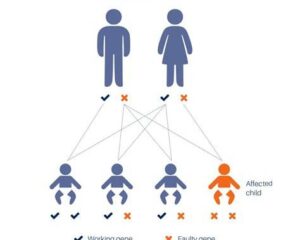
Epidemiologically, approximately 0.3% of couples are at risk of having a child affected by cystic fibrosis, spinal muscular atrophy, or Fragile X syndrome. Furthermore, more than 3,000 genes have been associated with genetic disorders involving either the autosomal chromosomes (22 pairs) or the sex chromosomes (X/Y).
The overall significance is greater than individual rare disorders might suggest. Approximately 1–2% of couples may be at increased risk of having a child affected by a selected severe recessive disorder. Studies of children diagnosed with autosomal recessive or X-linked disorders have suggested that a proportion of these conditions could potentially have been anticipated through expanded carrier screening.
ECS may therefore be considered broadly rather than exclusively on the basis of ethnic or ancestral background, as traditionally occurs with conditions such as β-thalassemia. It is particularly relevant for consanguineous couples, couples experiencing infertility, and those undergoing assisted reproduction. Whenever possible, screening before conception is preferable because it provides a wider range of reproductive options: natural conception followed by prenatal diagnosis, IVF with preimplantation genetic testing for monogenic disorders (PGT-M), the use of donor gametes, or acceptance of the identified genetic risk. Major professional guidance also emphasizes the advantages of preconception carrier screening and counseling.
However, identifying a carrier does not always concern only the health of a future child. It may also have direct implications for the mother’s own health.
The traditional assumption that heterozygous carriers are invariably asymptomatic does not apply to every gene. In a large study, approximately 9% of individuals undergoing expanded carrier screening carried variants associated with potential clinical implications for themselves.
Of particular importance to obstetricians, approximately 1 in 40 women may carry a genetic condition that could influence her medical management during pregnancy.
The clinical implications can be significant. Women carrying pathogenic variants associated with dystrophinopathies (DMD) may develop or experience worsening dilated cardiomyopathy during pregnancy. Factor V Leiden increases thromboembolic risk, while carriers of pathogenic variants in F11, F8, and F9 may have an increased risk of bleeding during delivery.
Carriers of ABCB11/ABCB4 variants have an increased risk of intrahepatic cholestasis of pregnancy, whereas female OTC carriers may develop severe hyperammonemic crises during the peripartum period.
A particularly important association involves HADHA/HADHB and HELLP syndrome or acute fatty liver of pregnancy (AFLP). When the fetus is affected by mitochondrial trifunctional protein deficiency, the reported maternal risk of HELLP/AFLP may reach 15–62%, potentially requiring specialized biochemical surveillance and maternal–fetal medicine monitoring.
Some findings also have long-term implications for women’s health, independently of pregnancy. A characteristic example is the FMR1 premutation, which is associated with an approximately 20–30% risk of Fragile X-associated primary ovarian insufficiency and may therefore influence reproductive planning and discussions regarding fertility preservation.